
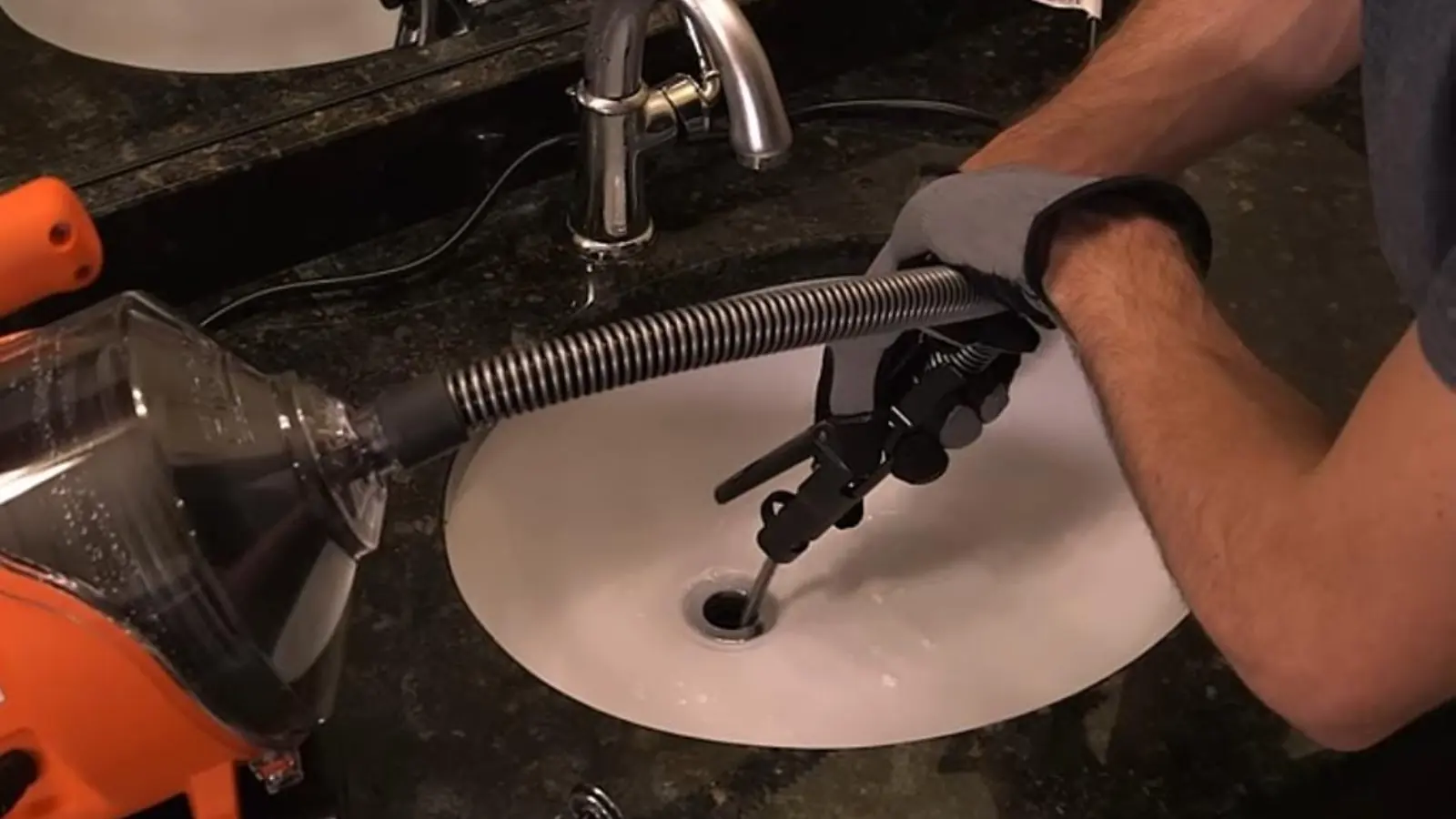
Check the pop-up stopper first
Many bathroom sinks use a pop-up stopper that rises and falls on a lever behind the faucet. If the stopper does not lift all the way, water drains slowly even with an open pipe below.
Remove the stopper by unscrewing the pivot nut behind the drain tailpiece or pulling the stopper straight up. Rinse it, clear hair from the shaft and adjust the linkage so it lifts a full half inch.
Causes and how to tell them apart
Work from the top down.
| Clue | Likely cause | Check |
|---|---|---|
| Slow from the first day after cleaning | Stopper not lifting | Adjust the lever and clevis |
| Water drains, then rises again | Partial blockage in trap or arm | Clean the trap |
| Gurgling sounds, slow drain | Blocked or restricted vent | Check vent on roof or in wall |
| Other fixtures also slow | Branch or main line issue | Call for drain cleaning |
| White crust on drain | Hard water scale | Soak in vinegar |
Clean the trap
Put a bucket under the P-trap, loosen the slip nuts by hand and drop the trap into the bucket. Clear hair and soap scum, rinse and reassemble with the washers in place.
If the horizontal pipe into the wall is slimy, clean it with a small brush. A sink that drains fine afterward had a partial blockage that did not fully stop water, which explains why it was slow but never stopped.
Think about the vent
Every drain needs air. A vent pipe lets air in behind the water so it flows smoothly. If the vent is blocked by debris, a bird nest or ice, water leaves slowly and the drain gurgles.
Vent problems are not a do-it-yourself fix if they require roof work. A plumber can check the vent from inside the house or camera it. Our drain cleaning team handles clogs and vent checks.
Hard water and the bathroom sink in Barberton
Barberton's latest water quality report lists hardness at about 170 mg/L, which falls in the hard range. Minerals build in stoppers, aerators and drain tailpieces and narrow the passages over time.
A routine soak of the stopper in vinegar removes scale, and a water softener reduces the buildup throughout the house. The same water supply serves parts of Norton and Coventry through the city plant.
Source: City of Barberton water quality report.
When it is not just the sink
If the tub, the toilet or the other sinks are slow too, the blockage is in a shared branch or the main line. Water coming up in the tub when you run the sink is a strong sign.
That is a job for a plumber, and a main line problem may need sewer line cleaning. We serve Barberton, Norton and Copley.
The overflow hole matters too
Most bathroom sinks have an overflow hole near the rim that connects to the drain below the stopper. Soap and hair can foul the overflow channel, which slows the air flow and the drain.
Flush the overflow with hot water and a small brush. A sink that gurgles when it drains often has a dirty overflow or a restricted vent.
Hair, soap and toothpaste buildup
Hair catches on the stopper pivot, and soap and toothpaste bind it into a mat. Over months the mat narrows the tailpiece, so water slows without a full clog.
A drain catcher and a monthly cleaning keep it open. Pull the stopper and clean it, and use a plastic drain tool to lift hair from the tailpiece.
What a plumbing vent does
A vent pipe goes through the roof and lets air enter the drain system so water moves freely. Without it, water drains slowly and traps can siphon dry, which lets sewer gas into the room.
Signs of a vent problem include gurgling in multiple fixtures, slow drains that improve after you open a window or a sewer smell. A plumber can check the vent run and clear it if needed.
A five-minute checklist
Lift the stopper and see if it lifts fully. Clear hair from the stopper and the tailpiece. Run hot water and listen for gurgling. Check the overflow channel, then clean the trap if the sink still drains slowly.
If none of those help, the restriction is further down the line. That is the point to call for professional cleaning rather than push a rented machine into old pipe.
When the stopper itself is the problem
Some stoppers are worn, bent or missing their gasket and do not seat correctly. Others use a clog-prone cage design that catches hair. Replacing the stopper assembly is cheap and often fixes a slow drain and a sink that will not hold water.
Choose a replacement that matches your drain size, and look for one with a lift rod you can remove for cleaning.
What the code expects under a sink
The Ohio Plumbing Code, built on the International Plumbing Code (IPC), requires a trap and a vent for each fixture. If a bathroom sink drains slowly with nothing blocking it, a partly blocked vent can be the cause.
A prevention routine
Use a hair catcher, flush the drain monthly with hot water and vinegar and clean the stopper every few months. Avoid chemical drain cleaners, which can damage pipes and harm anyone working on the drain later.
Questions readers ask
The stopper, a partial blockage in the trap or a vent problem are the usual reasons.
We advise against it. A mechanical clean is safer for pipes and for anyone working on the line afterward.
Place a bucket underneath, loosen the nuts by hand, remove the trap, clean it and reassemble with the washers.
Yes, scale narrows stoppers and tailpieces. Barberton's water is in the hard range.
Call if several fixtures are slow, if gurgling continues or if a trap cleaning does not help.
Have a question about your own home? Call (855) 575-2890.