
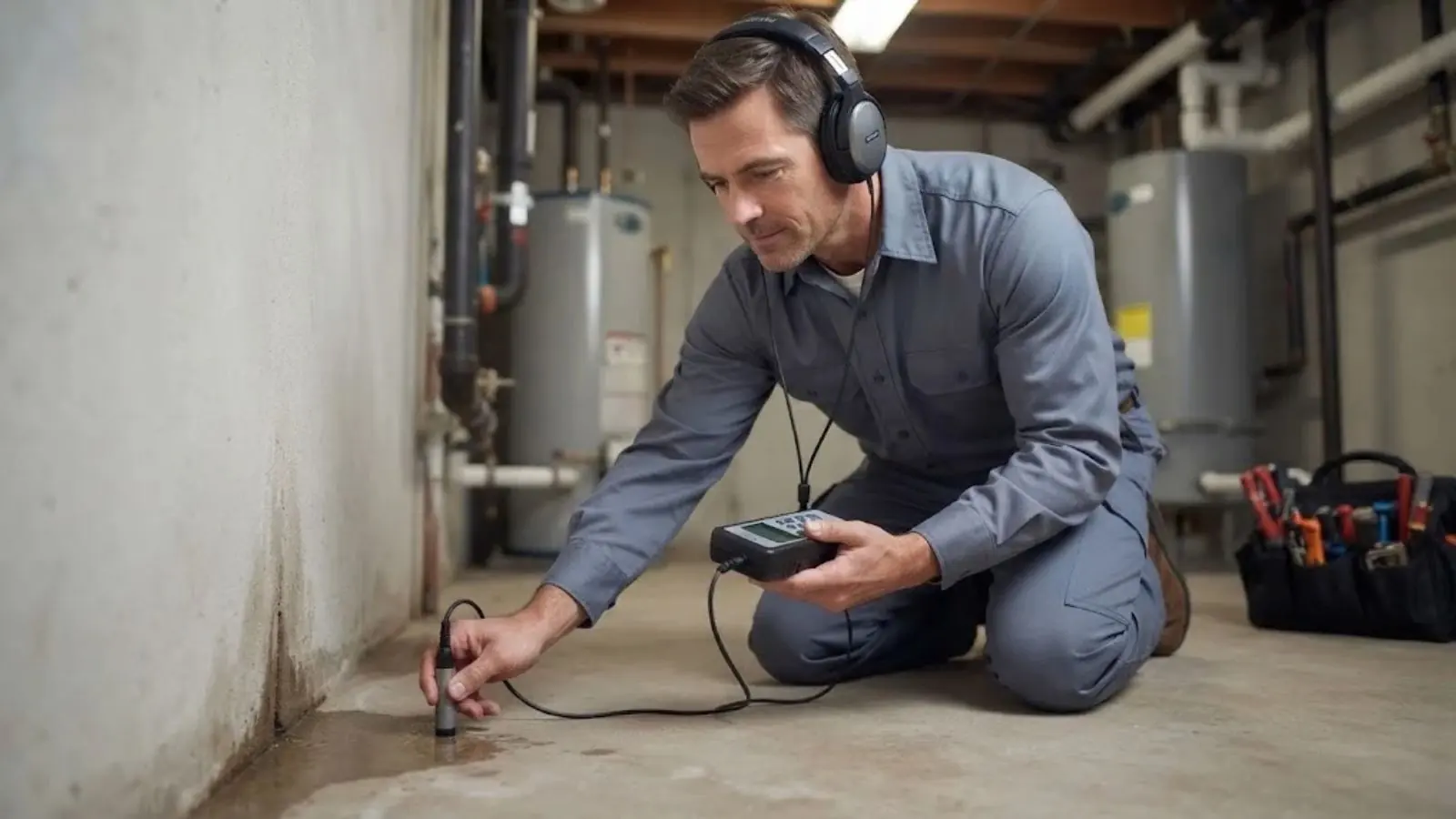
Start with the meter test
Turn off every fixture and appliance that uses water, including the ice maker and the dishwasher. Find your water meter, which is usually in the basement or a utility area, and look at the small triangle or dial that spins when water flows.
If it moves with everything off, water is going somewhere. Note the reading, wait an hour without using water and look again. A changed reading confirms a leak.
Four home checks and what they tell you
Work through them in order.
| Test | How | What a positive means |
|---|---|---|
| Meter check | All fixtures off, watch the dial | A leak exists somewhere |
| Toilet dye | Drop dye in the tank and wait | Color in the bowl means a flapper leak |
| Pressure gauge | Attach a gauge to a hose bib and watch the needle | Falling pressure with water off suggests a leak |
| Walk-through | Look for stains, warm spots, soft floors | Marks where water is reaching |
Toilets are the usual suspect
A leaking flapper can waste a surprising amount of water without a sound. Drop a few drops of food coloring in the tank and wait fifteen minutes without flushing. If color shows in the bowl, the flapper needs replacing.
A cheap part fixes it. If the flapper is fine and the meter still moves, the leak is in a supply line, a fixture or a buried pipe.
Clues that point to hidden leaks
Warm spots on a floor can mean a hot water line leaking under it. A musty smell, bubbling paint or a stain that grows after you run water are further clues. A sound of running water in a quiet house is another.
Take photos of what you find and note when each clue appears. That helps a plumber narrow the search, and our leak detection team uses acoustic gear and thermal imaging to find the exact spot.
Where to take billing questions in Barberton
Barberton's utilities department is located at 576 W Park Ave and handles water billing and new service questions. If your bill jumps, the department can explain the reading history, and a plumber can find the leak.
The city's water plant also posts a line for urgent water interruptions, so if the water goes off in your area, check with the utility before assuming the problem is inside your house. The June 2019 flooding is a reminder that wet basements can be groundwater, not plumbing, so check the meter before you blame a pipe.
Source: City of Barberton utilities and water treatment pages.
When to call a plumber
Call if the meter moves with everything off, if you see damage that grows or if you cannot find the source. Early detection limits damage to drywall, framing and insulation.
If a pipe has burst or water is actively flowing, shut off the main and follow the steps on our burst pipe repair page. If the water is groundwater, read about basement waterproofing.
Reading the meter correctly
Most meters have a sweep hand or a numeric register in cubic feet or gallons, plus a small low-flow indicator, often a triangle or gear, that spins with even a trickle. Check the label on the meter face to see the units.
Take a photo of the reading before and after your wait. Photos remove doubt and are useful if you need to discuss the bill with the utility.
Leaks under floors and behind walls
A leak in a concealed line can run for weeks before it shows. Warm patches on a floor, a musty closet or a stain that spreads with no rain are the usual signs. Ceilings below bathrooms are another place to look.
A plumber uses acoustic equipment to hear the leak and a thermal camera to see temperature differences. The goal is to open as small a section as possible.
What a leak costs you
A faucet that drips once per second wastes thousands of gallons a year. A running toilet can waste far more. Even a modest leak adds up on a bill and can damage materials around it.
Fixing a small leak early is nearly always cheaper than repairing the damage it causes. That is the real reason to run the meter test twice a year.
A simple pressure gauge test
Screw a pressure gauge onto an outdoor hose bib with all fixtures off. Note the reading and check it again after an hour. A steady needle means the house holds pressure, while a falling needle points to a leak.
The test works best when the water heater and appliances are quiet. A small drop can come from thermal expansion, so repeat it before you conclude.
What to tell the plumber
Share your meter test results, photos of stains, when the bill changed and whether you have a sprinkler or pool line. Mention the age of the house and any plumbing work done in the past.
That history shortens the search and lowers the cost of finding the leak.
What the EPA says about leaks
According to the EPA, the average home loses nearly 10,000 gallons of water a year to leaks. The meter test in this guide is the same first step a plumber uses.
Serving the area
We find leaks for homes in Barberton, Norton and Copley. A hidden leak can also come from a failing supply line that needs replacing instead of patching.
Questions readers ask
Run the meter test with all fixtures off. If the dial moves, you have a leak.
Yes. Even a slow leak can add up over a billing period.
Yes. A worn flapper is among the most common sources of wasted water.
The city's utilities department handles water billing, and its office is at 576 W Park Ave.
They use meter isolation, acoustic listening, thermal imaging, moisture meters and pressure tests.
Have a question about your own home? Call (855) 575-2890.