
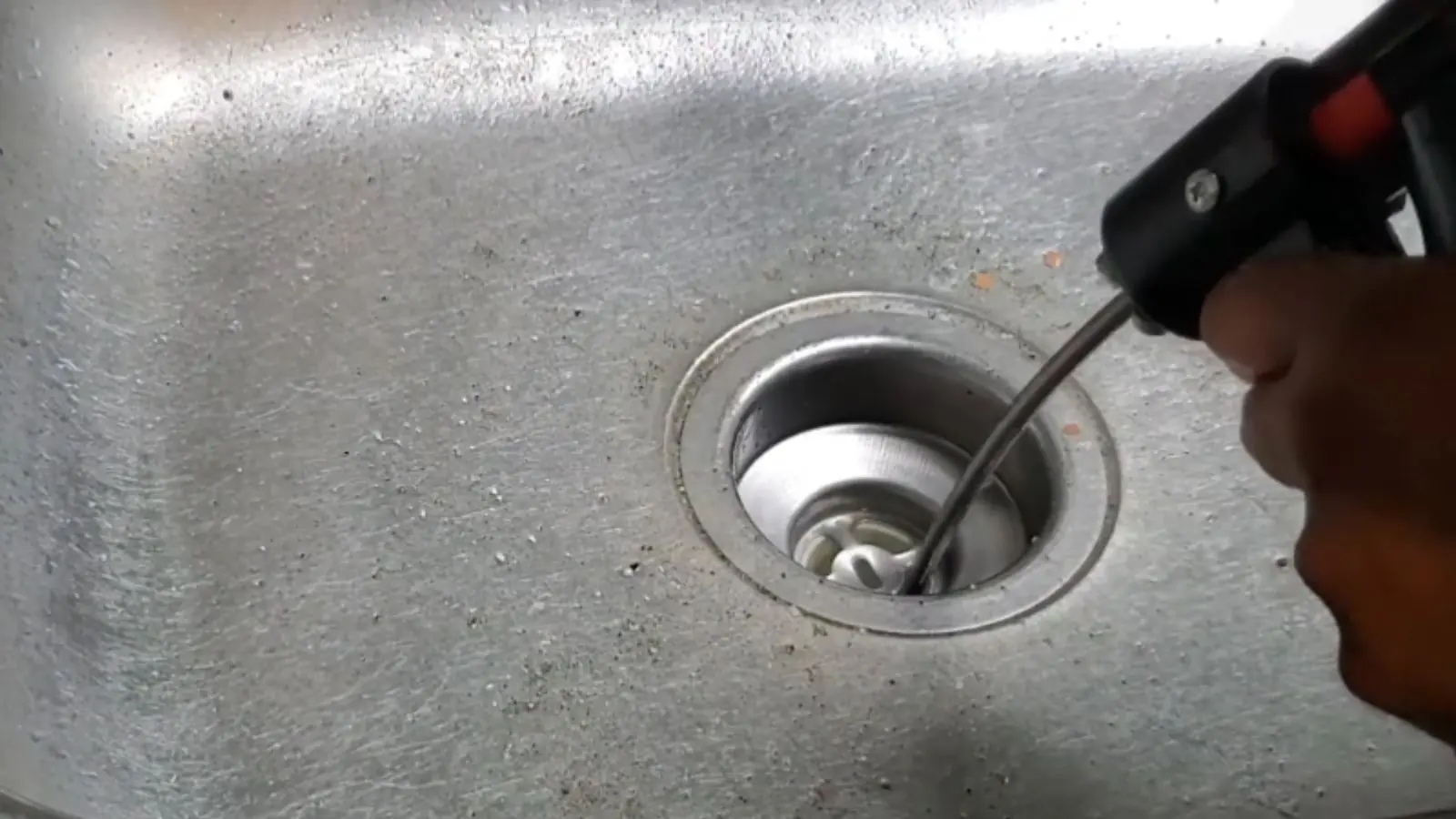
Slow is a warning, not a mystery
Water that leaves the sink slowly is telling you the pipe is narrowed. Grease builds on the pipe wall from cooking fat, and coffee grounds and starch settle on top, leaving a channel the size of a straw.
That channel drains a sink slowly, then clogs when something solid arrives. Acting now costs less than waiting for a full backup.
What to check in the kitchen
Use the clues to narrow the cause.
| Clue | Likely cause | Next step |
|---|---|---|
| Slow only with the dishwasher running | Blockage between sink and main | Clean the line |
| Disposal runs fine, water drains slowly | Grease on the drain wall | Cable or jet the line |
| Gurgling and slow drain | Venting issue or partial blockage | Plumber check |
| Odor with slow drain | Food and grease trapped | Clean trap and line |
| Both sinks slow | Shared line restricted | Line cleaning |
Dishwasher and disposal connections
A dishwasher drain hose connects at the disposal or the sink drain. If the knockout plug was left inside the disposal, or the hose is kinked, water backs up in the sink.
A disposal full of old scraps traps water too. Run cold water, grind small amounts and flush with plenty of water. If the problem persists, our garbage disposal service team can check the unit and the connections.
What a plumber does differently
A short cable opens the line, and for grease a jetter scrubs the wall. A hand plunger or a store-bought snake often moves a clog without removing the film that caused it, which is why the sink slows again in a month.
If the same sink slows repeatedly, schedule hydro jetting or a camera check. It removes the coating and shows whether the pipe is sagging.
Who is responsible for which pipe in Barberton
If the slow drain affects several fixtures, the restriction may be in your lateral or in the city's main. Barberton's utilities department at 576 W Park Ave can tell you how the line is divided on your street.
The city's stormwater information describes combined, sanitary and storm sewers, and a main under strain after a storm can slow house drains. If the slowness comes only after heavy rain, tell the city and your plumber, because the cause may not be in your house.
Source: City of Barberton utilities and stormwater pages.
Air gaps and high loops
Many dishwashers drain through an air gap or a high loop in the hose that keeps dirty water from flowing back. If the air gap on the sink deck clogs, the dishwasher can back into the sink.
Pull the cap and clean the air gap with a small brush. If the hose has a sag or a kink, straighten it, and make sure the high loop is secured under the counter.
Double bowls and shared traps
Two sinks that share one trap drain together, so a partial blockage shows up as slow draining in both bowls. When you drain one bowl and the other gurgles, the shared line is restricted.
A plumber can clear the line from the cleanout and the trap. If the sinks are slow only when both are full, the pipe is likely undersized or partly blocked.
A belly in the pipe
A sagging section of drain pipe holds water and collects solids. It drains slowly and clogs repeatedly because the water cannot carry debris past the low point.
A camera inspection finds the belly. Depending on the location, the fix is to re-pitch the pipe or replace a section. Our camera inspection can check your line.
A quick home test
Fill the bowl with a few inches of water and let it drain. Time it and listen. A smooth, quiet drain is healthy, while a slow drain with gurgling points to a restriction or vent trouble.
Repeat with the dishwasher draining into the sink. If it slows only then, the issue is in the dishwasher connection or the disposal inlet.
Why chemical cleaners are a poor fix
Chemical cleaners eat through a clog in a narrow spot, but they leave grease on the walls and sit in the trap if the drain stays slow. They can damage some pipes and finishes and are a risk to anyone who opens the line afterward.
A mechanical cleaning removes the film and does not rely on harsh chemicals. If the sink is slow again soon after cleaning, schedule a jetting visit.
What a plumber checks first
A plumber starts at the sink, checks the trap and the disposal inlet, then moves to the cleanout or the nearest access point. They watch how fast water leaves and listen for gurgling.
Clear information helps. Tell them when the slowness started, whether it changes with rain and whether other fixtures are slow too.
Why venting matters
Under the Ohio Plumbing Code, built on the International Plumbing Code (IPC), every trap needs a vent so water can flow without pulling air through the drain. A sink that drains slowly even after cleaning is worth a vent check.
Prevent the next slowdown
Wipe greasy pans with a paper towel before washing, collect used cooking fat in a can and rinse the drain with hot water after washing dishes. Avoid pouring hot oil down the sink.
A yearly drain cleaning visit helps older kitchens where grease has built over the years. We serve Barberton, Norton and Copley.
Questions readers ask
A partial blockage downstream, often grease, narrows the pipe even though nothing seems stuck.
It may freshen the drain but does not remove grease coating.
Yes. A kinked hose or a plug left in the disposal inlet restricts flow.
Contact the city utilities office, which can check the main.
It depends on use. A yearly check helps older homes.
Have a question about your own home? Call (855) 575-2890.