
Safe checks before you call
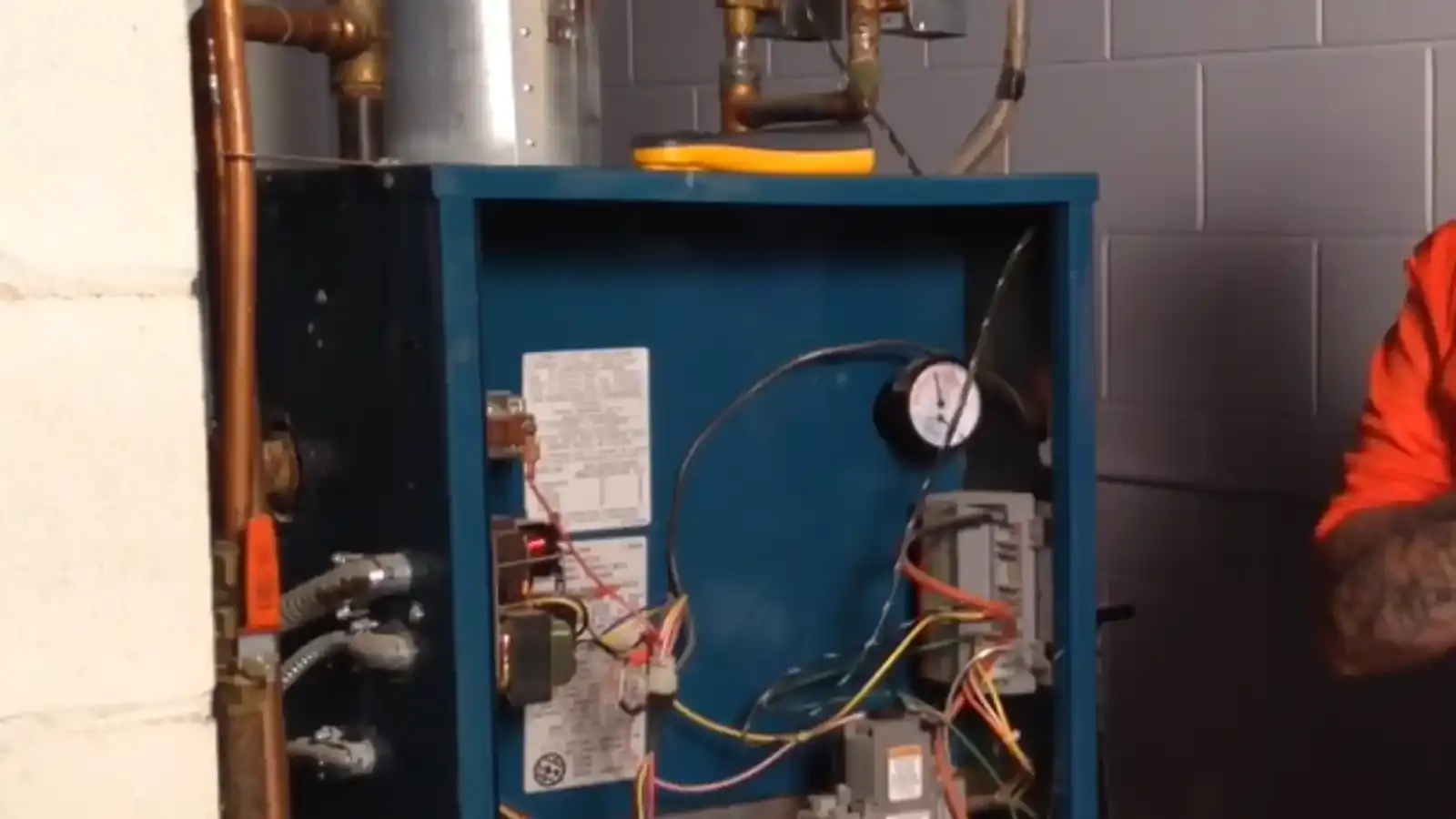
Start with the thermostat. Confirm it is set to heat and calling for heat. Then check that the boiler has power and that the pressure gauge reads within the range printed on the unit.
Bleed radiators if upstairs rooms are cold. Trapped air blocks the flow of hot water, and a small key opens the bleed valve. Close it when water appears. If you smell gas or a carbon monoxide alarm sounds, leave the building and call the gas utility or 911.
What you can do and what you should not
The dividing line is gas, combustion and sealed components.
| Task | Homeowner | Professional |
|---|---|---|
| Check thermostat and power | Yes | If the fault persists |
| Bleed radiators | Yes | If air returns often |
| Reset once after a lockout | Yes | If it locks out again |
| Adjust gas valve or burner | No | Always |
| Replace circulator or zone valve | No | Yes |
| Repair heat exchanger or flue | No | Always, safety critical |
Common faults and what causes them
Low pressure often means a leak or a failed expansion tank. Banging or kettling suggests scale or air in the system. Cold radiators in one zone point to a stuck zone valve or a failing circulator.
A boiler that short-cycles, turning on and off quickly, may be oversized, dirty or running with a faulty sensor. Each cause has a different fix, and guessing wastes time and money.
Codes and permits for boiler work in Barberton
Barberton's building department pages list the 2017 Ohio Plumbing Code and the 2019 Residential Code of Ohio. In 2026 the city announced that Summit County's Division of Building Standards takes over state-required building code enforcement.
The announcement does not say which office handles boiler permits, so call before replacing a boiler or changing the venting. For simple repairs, a permit is usually not an issue, but rules vary, so ask first.
Source: City of Barberton building department pages.
When to repair and when to replace
A well-kept boiler can last for decades. Repair makes sense for a failed part on a sound unit. Replacement makes sense when the heat exchanger leaks, the repair bill nears the cost of a new unit or the boiler fails a combustion test.
Our boiler repair team can diagnose and quote before you decide. If a no-heat failure causes a freeze, shut off the main and read about burst pipe repair.
Hot water and steam boilers are different
A hot water boiler pumps heated water through pipes to radiators or baseboards, and it runs under modest pressure. A steam boiler boils water and sends steam to radiators, which return condensate by gravity.
Knowing which you have changes the checks. A hot water system has a pressure gauge and an expansion tank. A steam system has a sight glass and a water level to watch.
Reading the pressure gauge
A hot water boiler usually runs in a modest pressure range printed on the unit, and the needle rises as the water heats. A needle that sits at zero means a leak or a failed fill. A needle that climbs very high suggests a bad expansion tank or a stuck fill valve.
Do not keep adding water without finding the loss. Repeated top-ups hide a leak, and fresh water brings more oxygen and scale into the system.
A winter-prep checklist
Before the first cold snap, bleed radiators, clear furniture from the boiler area, check that vents and flues are clear of snow and debris and test a carbon monoxide alarm. Keep the thermostat set to a modest temperature during outages to avoid freezing pipes.
Know where the emergency shutoff switch is and who to call. A boiler that fails at midnight needs a quick response, and our 24/7 boiler repair line is built for that.
Carbon monoxide safety
A faulty burner, a blocked flue or a cracked heat exchanger can leak carbon monoxide. Install alarms on every level and near sleeping areas, and replace them on the maker's schedule.
If an alarm sounds, get everyone outside and call 911. Do not go back in to find the cause.
What a service visit costs you in time
A diagnosis takes an hour or two. Many repairs finish the same day if the plumber carries common parts such as igniters, zone valves and circulators. A rare part may need ordering, and the plumber should tell you the wait.
Ask what to do in the meantime, such as portable heat safety and keeping pipes from freezing. Space heaters need space and attention, so follow the maker's rules.
Quick safety rules around any boiler
Keep combustibles away from the boiler, never store paint or gasoline near it and keep the room well ventilated. Do not block combustion air openings.
If you smell gas, see water spraying or hear loud banging, shut off the boiler if you can do so safely and call a professional. When in doubt, leave and call.
Prevent the next breakdown
Schedule a yearly tune-up before the heating season, keep the area around the boiler clear and test carbon monoxide alarms. Watch the pressure gauge during the first cold week.
A boiler pairs with other systems. If hot water for taps is the problem, see water heater repair. We serve Barberton, Norton and Copley.
Questions readers ask
Check the thermostat, power and pressure. Beyond those, call a professional.
Yes, with the boiler off and cool. Close the valve when water appears.
Only basic checks. Gas, combustion and heat exchanger work need a licensed professional.
Permit rules vary. Call the city building department or Summit County before replacing or re-venting.
Yearly, before the heating season.
Have a question about your own home? Call (855) 575-2890.