
Start outside with water control
Most basement water starts as rain that lands next to the foundation. Clean the gutters, extend downspouts several feet from the wall and check that the soil slopes away from the house.
These changes cost little and reduce the water that reaches the foundation. They will not fix a high water table, but they remove one of the most common causes.
DIY fixes and their limits
Know what each step can and cannot do.
| Fix | Helps with | Does not fix |
|---|---|---|
| Gutter and downspout work | Roof water near the foundation | Rising groundwater |
| Regrading soil | Surface runoff | Water under the slab |
| Masonry sealer paint | Minor dampness | Pressurized seepage |
| Crack sealer | Small non-structural cracks | Active leaks or moving walls |
| Dehumidifier | Humidity and musty smell | Liquid water |
| Window well covers | Water entering at windows | Water at the floor joint |
Why paint-on sealers often fail
Groundwater presses against the foundation with real force. A paint-on sealer on the inside of a wall can hold for a season, then blister and peel as water pushes it off.
If you see white mineral deposits on the wall, called efflorescence, water is passing through the masonry. A sealer may hide it for a while, but it does not stop it.
Barberton's valley and its water table
Barberton's original settlement sits in a valley parallel to the Tuscarawas River, and creeks feed in from surrounding slopes. When the ground is saturated, water has few places to go, and June 2019 showed how quickly basements can flood here.
Floodplain construction needs a permit under the city's stormwater rules, so ask before you change grading or build near the river. And if your basement floods after a storm, check whether the water comes from groundwater or a pipe, because the fix differs.
Source: City of Barberton stormwater information and city press coverage of the 2019 flooding.
When water is a plumbing leak
A basement can be wet because a supply line is leaking, not because of groundwater. Check the water meter with every fixture off. If it moves, call for leak detection.
A sump pit that fills and a pump that cannot keep up point to a drainage problem. See sump pump service for sizing and backups.
When to call for drainage
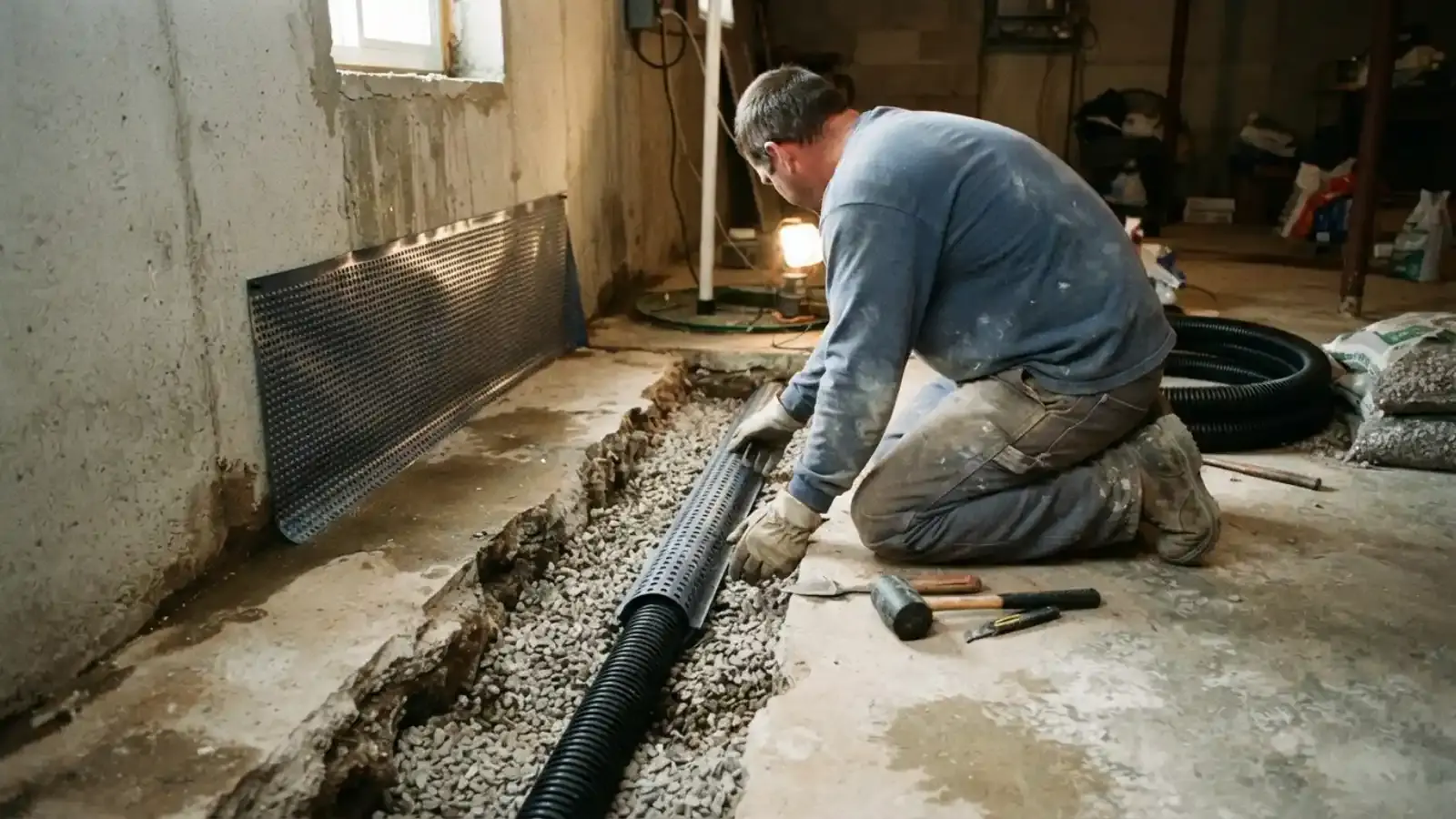
Call when water enters through the floor-wall joint, when the sump pit fills fast after rain or when walls bow or crack. An interior drain and sump system collects water before it reaches the living space, and our basement waterproofing page explains it.
We do not repair structural cracks or bowing walls, and we will tell you if you need a foundation specialist. We serve Barberton, Norton and Copley.
Window wells and openings
Window wells collect rain and leaves, and a clogged well can push water through the window frame. Clear debris, check the drain at the bottom and add a clear cover to keep rain out while letting light in.
Check the caulk around pipes and vents where they enter the foundation. Hydraulic cement fills small gaps, but it does not fix a seeping wall.
Landscaping that helps or hurts
Soil should slope away from the foundation, dropping several inches over the first several feet if possible. Mulch beds that trap water against the wall, and planters set tight to the house, work against you.
Downspout extensions should discharge well away from the house and onto ground that slopes away. A buried drain pipe is an option if the yard is flat.
Humidity targets and what they mean
A basement that stays above about half relative humidity invites mildew. A hygrometer costs little and tells you where you stand. A dehumidifier with a drain hose runs without emptying a bucket.
If the humidity stays high despite a dehumidifier, water is still entering. That is the sign to look for a source instead of drying air.
Warning signs of structural trouble
A horizontal crack, a wall that bows inward, stair-step cracks in block or doors that stick may point to pressure on the foundation. Those need a structural opinion before anything else.
Do not seal over them and hope. A foundation specialist or engineer can tell you whether the wall is moving.
A realistic budget of effort
Gutter cleaning, downspout extensions and regrading take a weekend and a modest spend. A dehumidifier and shelving take an afternoon. These steps are worth doing even if you later add a drainage system.
Plan your effort in order of cost. Start with water control outside, then humidity control inside, and then talk to a pro if water still comes in.
When DIY becomes a risk
Digging against a foundation, cutting a drain channel in a slab or draining a sump to the wrong place can cause more trouble than it solves. So can tackling a wall that is already moving.
If a task needs a rented jackhammer, an excavation near a gas line or a permit you have not checked, it is time to call someone. Stopping early costs less than undoing a mistake.
Drying guidelines to follow
According to the EPA, wet materials should be dried within 24 to 48 hours to avoid mold growth. If a basement stays damp past that, a surface coating will not fix the real problem.
Protect your belongings meanwhile
Store items on shelves or plastic racks, move electronics up and run a dehumidifier. Keep a wet-dry vacuum handy and clear the floor drain so water has a path.
Questions readers ask
For minor dampness, grading, gutters and a dehumidifier help. Active seepage needs drainage.
Humidity and trapped moisture grow mildew. Control the source and use a dehumidifier.
It shows water moves through the wall. It is a sign of moisture, not always active leaking.
The city's stormwater information says construction in the 100-year floodplain needs a Floodplain Permit.
Small hairline cracks, maybe. Wide, horizontal or growing cracks need a specialist.
Have a question about your own home? Call (855) 575-2890.